

Is bleeding when I floss just ‘sensitive gums’ — or something more?
A lot of people decide they are “just brushing too hard.” The pink in the sink keeps showing up. Healthy gums hold your teeth the way a foundation holds a house. When plaque hardens below the gumline, a regular cleaning cannot always reach it. Dr. Kurt and Dr. Wyatt Knechtel will tell you whether this is gingivitis you can still turn around — or periodontitis that needs a deeper visit.
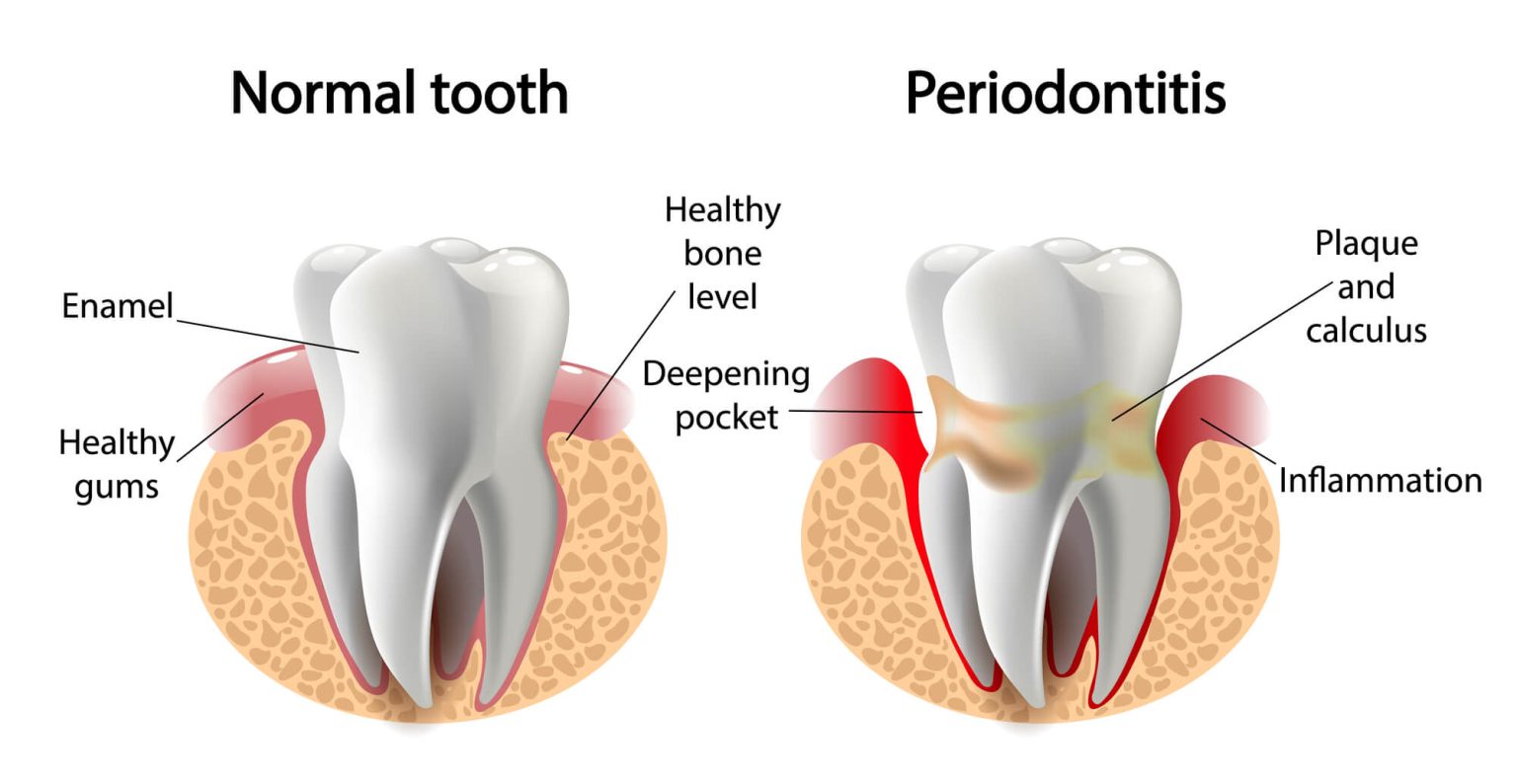
The pink in the sink
Gums are easy to ignore until they are not. Plaque you miss hardens into tartar. The tissue that should hug the tooth starts to pull, bleed, or ache. In later stages chewing hurts and a tooth can feel loose. That is not a cleaning you skipped once. That is an infection in the foundation.
Family history and other health factors can make some mouths more prone. Brushing, flossing, and showing up for exams still change the story for most people. Quiet disease is the part that surprises patients — you can have a problem before it shouts.
Two chapters of the same story
Gingivitis is the earlier chapter: red, puffy, or bleeding gums, especially when you floss. Caught here, a standard cleaning and honest home care can often reverse the inflammation. This is the chapter we want you in.
Periodontitis is the later one. Pockets deepen. Bone can be lost. Teeth may drift. We manage that infection and protect what is left — we do not talk about a cure. A deep cleaning is usually the next page, long before anyone mentions surgery.
This is not a longer regular cleaning
A regular cleaning is the visit you know: every few months, plaque and tartar at and just under the gumline, a healthier mouth. A deep cleaning — scaling and root planing — goes into the pockets. The hygienist or dentist removes what a regular visit cannot reach and smooths the roots so gums can sit closer to the tooth again.
You will likely be numb. Advanced cases often take more than one appointment — one side, then the other — so you are not in the chair forever. Diagnosis is simple in the room: looking, a small probe that measures pocket depth, X-rays when they help show bone. None of that is meant to startle you. It is how we know which chapter you are in.
Myths about gum disease
“If it does not hurt, I am fine.” Gum disease can be quiet. Pregnancy, a high-sugar diet, and especially smoking raise risk. Tobacco makes gums slower to heal. Bleeding is a clue, not a diagnosis.
“Once you have it, you have it.” Gingivitis can often be turned around. Periodontitis is managed. Those are different sentences. Waiting does not make the second one easier.
“Surgery is next.” Surgery is uncommon. We talk about it only if pockets stay too deep to clean with instruments.
The days after
Soreness or sensitivity for a few days is common. That is the mouth settling, not a sign the visit “did not take.” We will tell you what to watch for and when to come back. The unglamorous sequel is daily: fluoride toothpaste, floss, less sugar, less tobacco. Checkups catch the next chapter while it is still short.
Untreated gum disease is associated with other health concerns. Your dentist can talk about what that means for your history — not a scare list from the internet.
If the sink keeps turning pink, do not decide you are a rough brusher. Call (720) 815-4733 to schedule at Longmont Dental — serving Longmont, Boulder County, and Northern Colorado.
Interactive guide
Only a dental exam can determine your gum health stage and the right level of care for you.
Deep cleaning and gum questions
Answers about gingivitis, periodontitis, and scaling and root planing at Longmont Dental.
Ready for dental care that feels like family?
Start with the simplest next step: request an appointment, call the office, or get directions before your first visit.
Use the Call, Directions, or Request options below to get started.