

Can I rebuild my smile after tooth loss?
Tooth loss is not something you should learn to live with. At Longmont Dental, Dr. Kurt and Dr. Wyatt Knechtel help Longmont and Boulder County families restore comfortable, natural-looking smiles — with personalized planning and start-to-finish care in one familiar office.
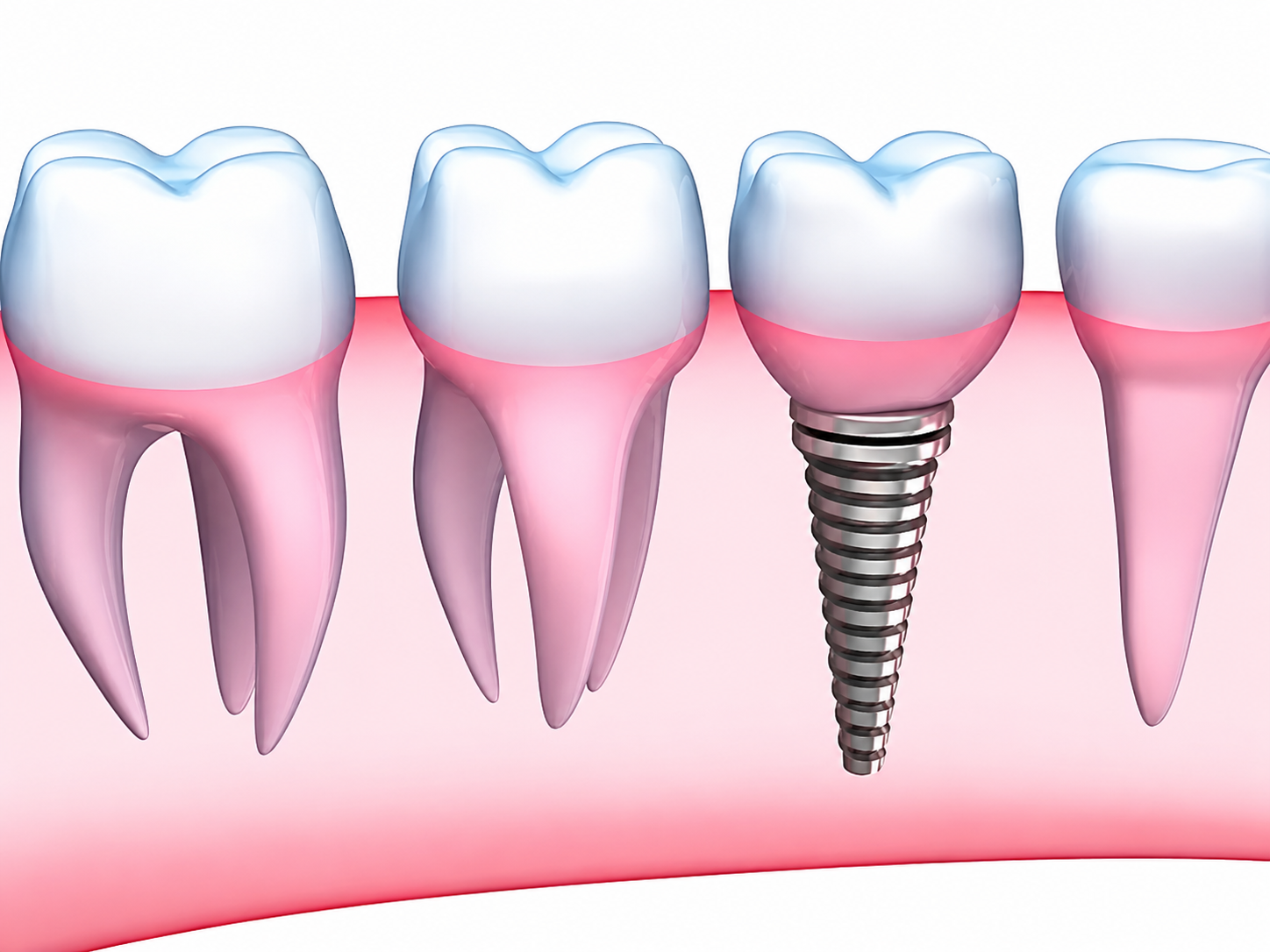
Restoring confidence in your smile
Missing or damaged teeth can affect how you feel about your smile — and how freely you speak, laugh, and show your teeth around the people you love.
One of the most compelling benefits of a well-planned replacement tooth is a lifelike appearance. Your dentist customizes your crown to match the shape, size, and color of your surrounding teeth — so it integrates seamlessly and you can feel like yourself again.
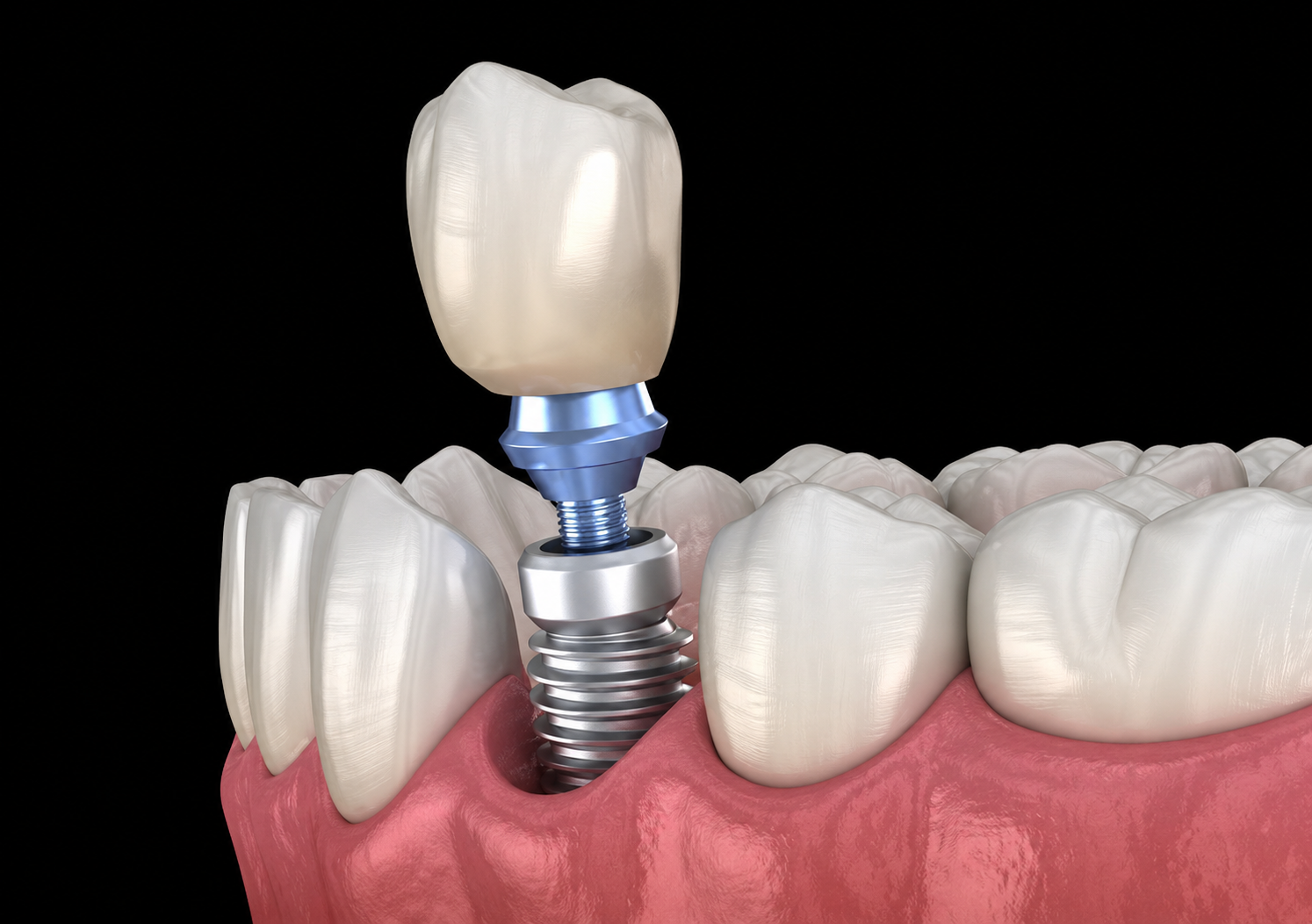
Implant treatment requires an exam, imaging, and personalized planning. Your dentist will review options before any procedure.
Restoring everyday function
Replacing a missing tooth is about more than looks. When everything is connected to a solid foundation, an implant can function effectively — helping you eat, speak, and go about daily life with greater ease.
Millions of patients have rebuilt their smiles since implants became widely available. Modern options — including mini implants for some patients with bone loss — have opened doors for people who once thought bridges or dentures were their only path.
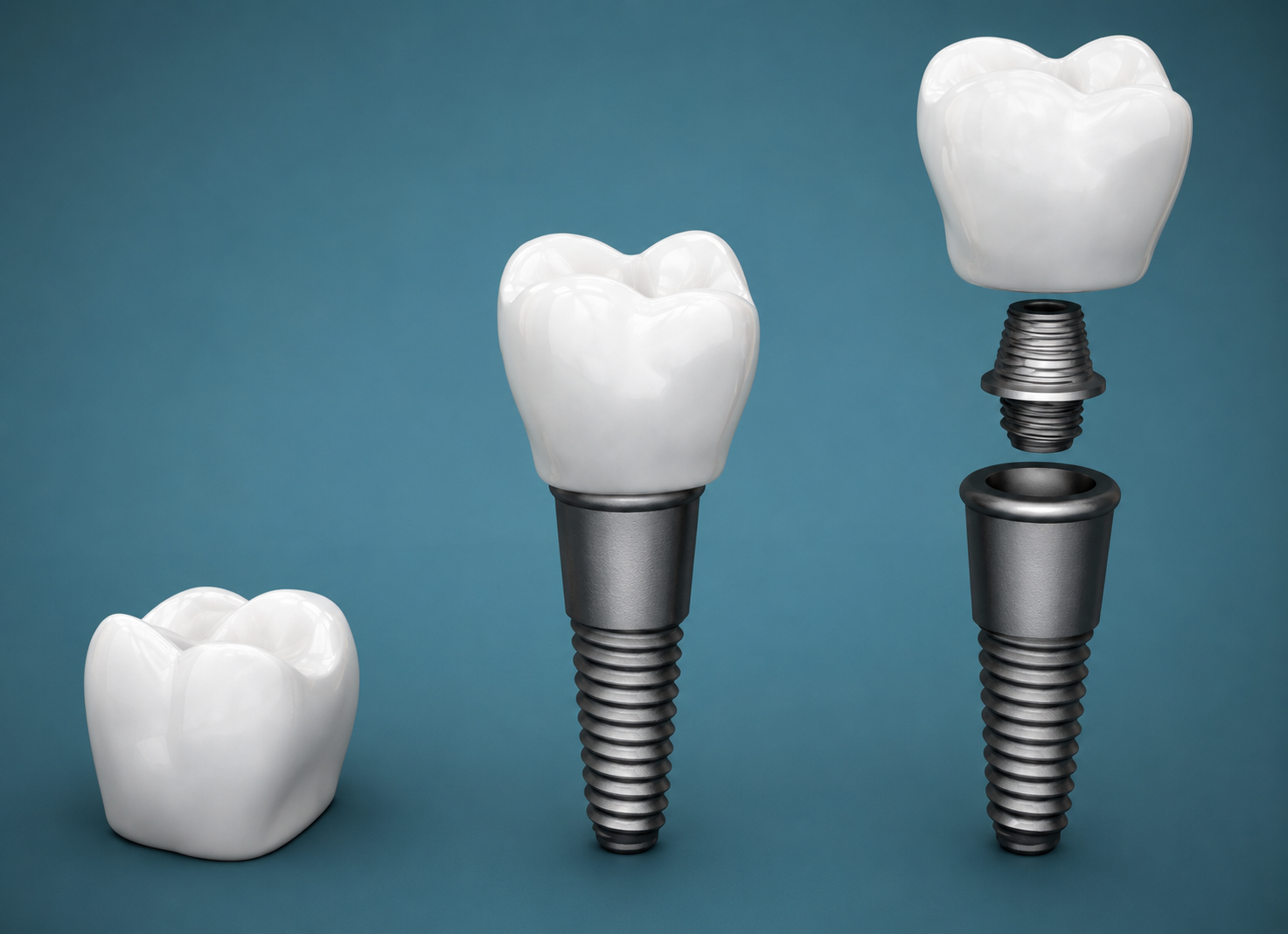
Implant treatment requires an exam, imaging, and personalized planning. Your dentist will review options before any procedure.
Personalized care at your dental home
Led by Dr. Kurt Knechtel, DMD, Longmont Dental strives to be a true dental home for patients and their families from Longmont and throughout the Boulder area.
For implants, Dr. Knechtel brings advanced training and in-house technology to every step — so visits can be efficient, safe, pleasant, and convenient. You are not passed between offices; your care is coordinated by a team that already knows you.
3D imaging that supports planning
When a case needs a clearer picture, cone-beam imaging helps your dentist understand teeth, jaw, airway, and surrounding structures before recommending next steps.
How does 3D imaging help me understand my options?
Quick scan
The scanner rotates around you and captures detailed images in seconds.
Clearer view
Cone-beam images show a big-picture view of the mouth and nearby structures from multiple angles.
Personalized settings
Volume, dose, and image quality can be adjusted to the diagnostic need.
Shared plan
Images can be reviewed on screen so you can understand what your dentist sees.
Your dentist recommends 3D imaging only when it supports diagnosis or treatment planning for your situation.
Comfort-first visits
We know tooth replacement can feel like a big decision. Our focus is on making each visit as comfortable and clear as possible — answering your questions, explaining your options, and never rushing you through a choice that affects your health and confidence.
When a more conservative approach fits your situation, mini implants may require only a single appointment with localized anesthesia — with less alteration of natural tissues at the treatment site. Your dentist will recommend what is appropriate for you.
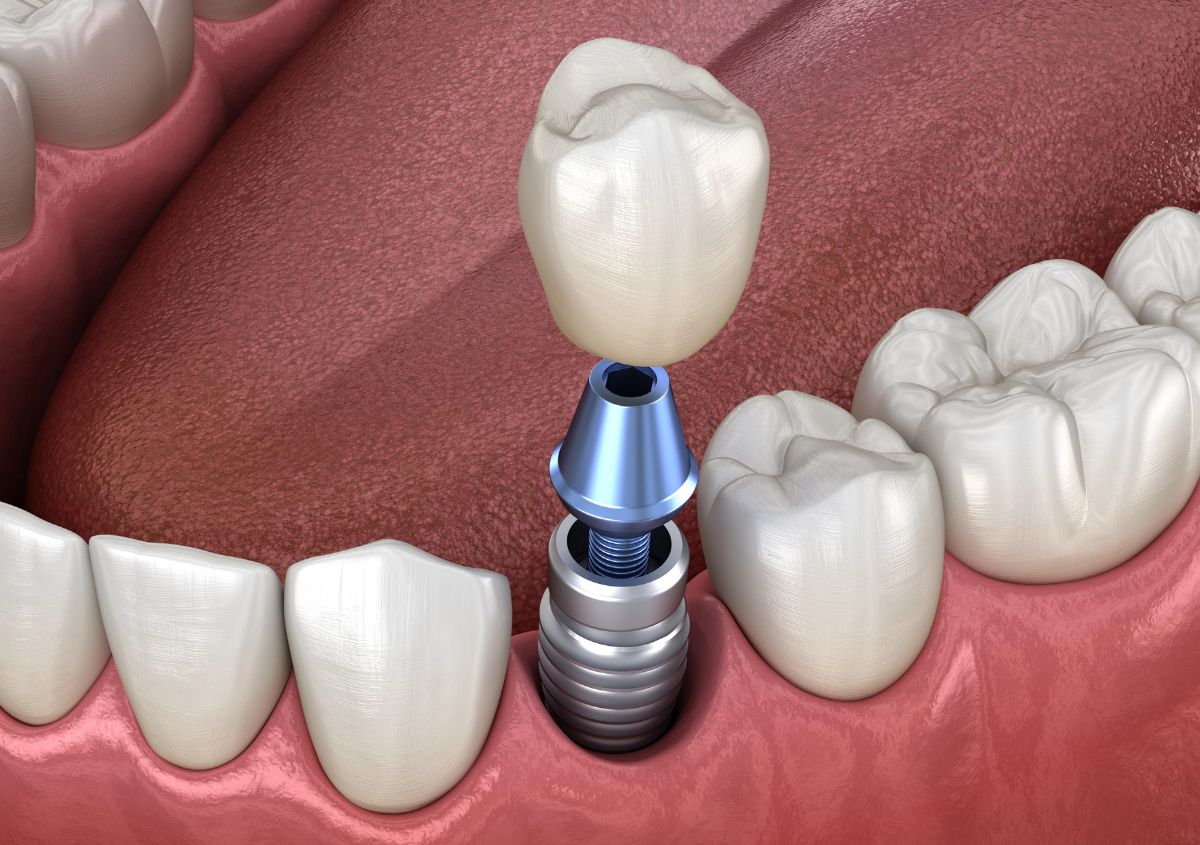
Implant eligibility depends on bone density, health history, and other factors your dentist will evaluate.
How an implant is built
A typical implant has three parts: a titanium post placed in the jaw, an abutment that connects to that post, and a crown, bridge, or denture on top. After placement, the post needs time to bond with bone — a process called osseointegration — before the final restoration is attached.
That healing window is often about four to six months, then the abutment and restoration can be placed. Your own timeline depends on bone support, the number of teeth being replaced, and your health.
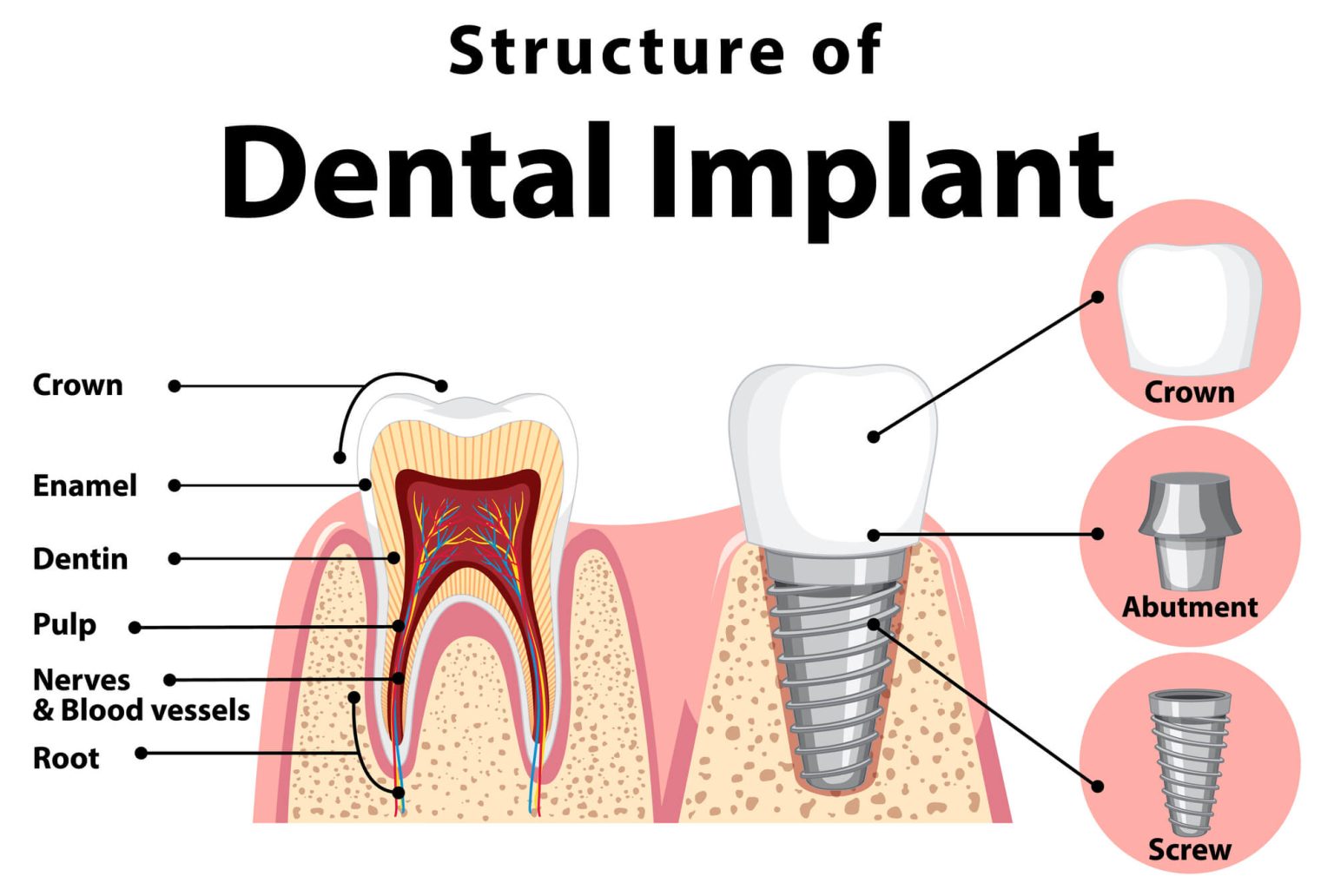
Implant treatment requires an exam, imaging, and personalized planning. Not every patient is a candidate. Your dentist will review options before any procedure.
Who may be a candidate
Candidacy depends on bone quality, gum health, and general health — not age alone. People in their 60s, 70s, and beyond can still be candidates when the foundation is sound. If bone is thin, grafting or a sinus lift may be discussed to rebuild support before or during implant care.
Your dentist will also review habits, bite, and medical history. Mini implants may be an option for some patients with bone loss. No plan is promised until that exam and imaging are complete.
Replacing a full arch
When most or all teeth in a jaw need replacement, a full-arch plan typically uses several implants — often in the range of four to eight per arch — to support a fixed or removable set of teeth after healing.
The prosthetic can be designed to stay in place or to come out for cleaning, depending on your goals and what the bone can support. This is a high-level overview — your dentist will map the details after 3D planning.
Understanding your options
Before any treatment, your dentist helps you understand how implants compare with bridges and dentures — and what makes sense for your mouth, health, and goals. Dentures are typically removed at night; bridges may require reshaping neighboring teeth. An implant stands on its own post.
Implants are designed as a long-term replacement, not a guaranteed lifetime or permanent solution. How well they last depends on bone support, hygiene, bite, and follow-up care. 3D imaging when needed supports precise planning — so you can see what your dentist sees before moving forward.
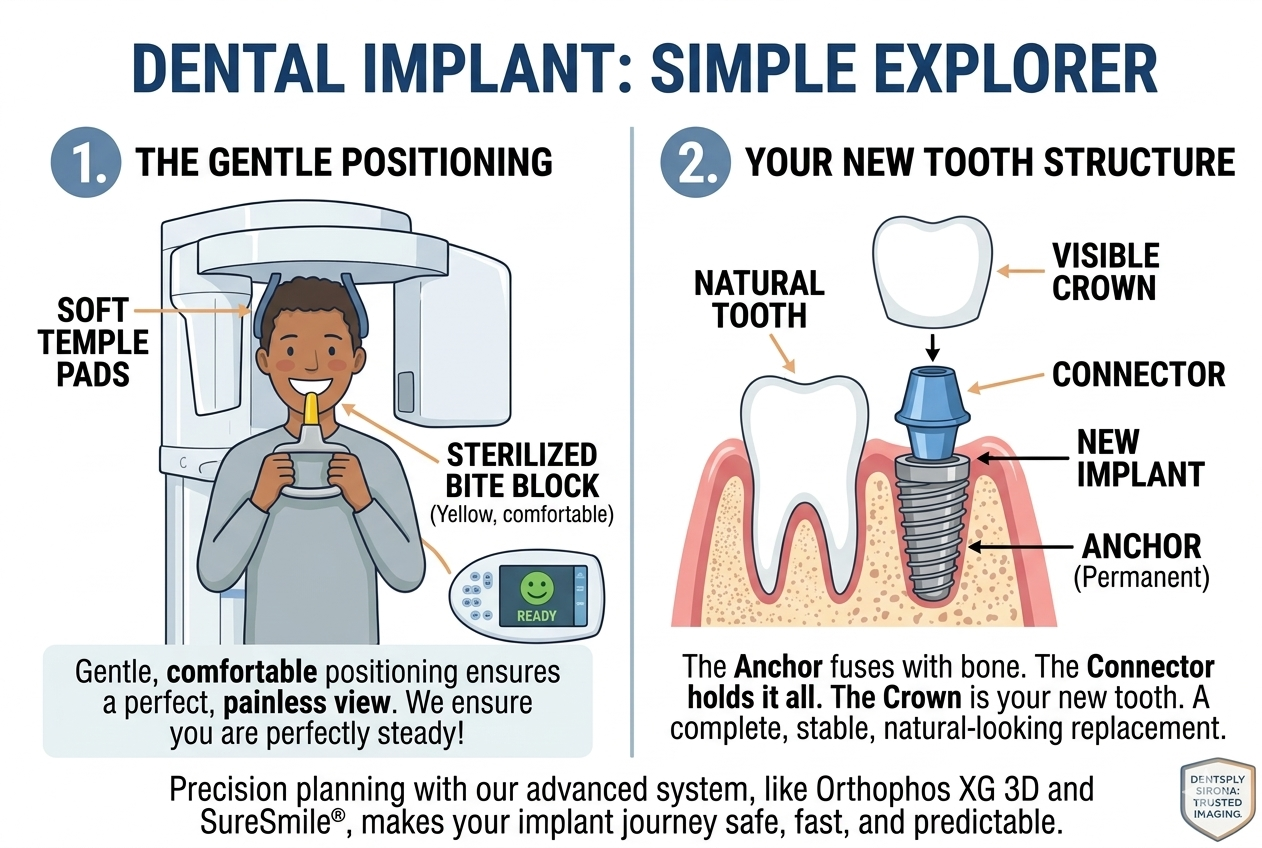
Implant treatment requires an exam, imaging, and personalized planning. Not every patient is a candidate.
Your next step
Every plan starts with a conversation. Dr. Kurt or Dr. Wyatt will examine your mouth, learn what you hope to achieve, and walk you through implant, bridge, and denture options without pressure.
Ready to explore rebuilding your smile? Call (720) 815-4733 to schedule a consultation at Longmont Dental — serving Boulder County and Northern Colorado.
Your care path at Longmont Dental
Every patient is different. After your consultation, Dr. Kurt or Dr. Wyatt maps out steps that fit your health, comfort, and goals — with start-to-finish care in one familiar office.
What should I expect along the way?
Your care path at Longmont Dental
Every patient is different. After your consultation, Dr. Kurt or Dr. Wyatt maps out steps that fit your health, comfort, and goals — with start-to-finish care in one familiar office.
What should I expect along the way?
- 1
Consultation
Share your goals and concerns. Your dentist examines your mouth and discusses whether an implant, bridge, or denture is the right direction for you.
- 2
Personalized planning
Your health history, gum health, and 3D imaging when needed help shape a plan designed for you — not a one-size-fits-all approach.
- 3
Comfort-focused treatment
When an implant is appropriate, your care stays in-house. We focus on efficient, pleasant visits and clear expectations at every step.
- 4
Your restored smile
A custom crown matched to your teeth — so you can speak, smile, and laugh without feeling self-conscious about your teeth.
If bone loss has been a concern, mini implants may offer a more conservative path — sometimes in a single appointment with localized anesthesia. Dr. Knechtel will recommend what fits your situation.
Timelines vary by patient and treatment plan. Your dentist will explain what to expect before any procedure.
Tooth replacement questions
Answers about dental implants and tooth replacement at Longmont Dental — from our prepared patient information.
Ready for dental care that feels like family?
Start with the simplest next step: request an appointment, call the office, or get directions before your first visit.
Use the Call, Directions, or Request options below to get started.