

Can a root canal save a painful or infected tooth?
It often starts as a night that will not end — heat, cold, or a bite that lights up one tooth. Root canal therapy is how we treat an infected or inflamed pulp so you can keep that tooth when it can still be saved. Dr. Kurt and Dr. Wyatt Knechtel walk you through the exam, the visit, and the crown that usually finishes the story — including laser-assisted cleaning when it fits.
What a root canal does
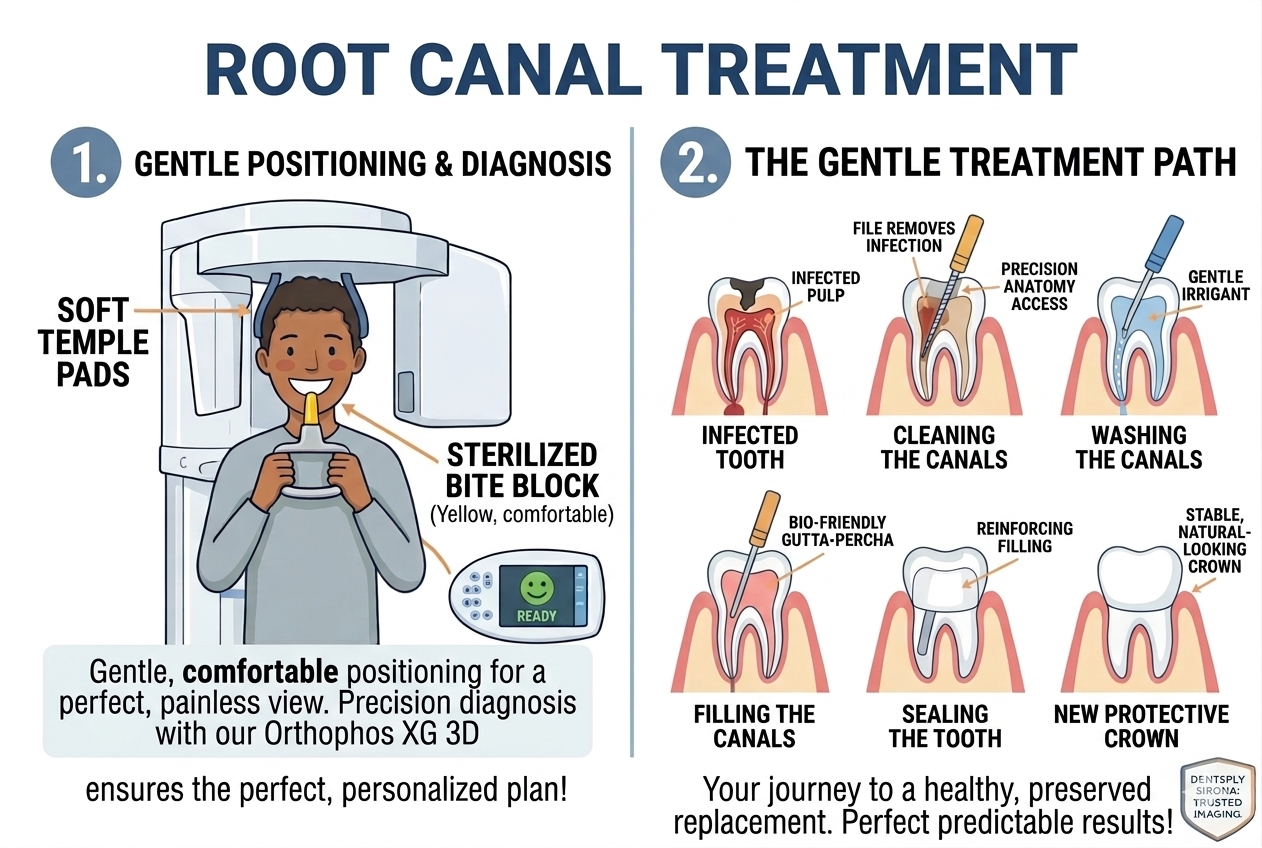
Inside each tooth is pulp — soft tissue with nerves and blood vessels. When bacteria reach that space through deep decay, a crack, an injury, or a failing restoration, the pulp can become inflamed or infected.
Root canal therapy removes that damaged pulp, cleans and shapes the canals, then seals the space so the tooth can stay in place. The goal is to relieve the source of the infection and keep your natural tooth when your dentist determines it can be saved.
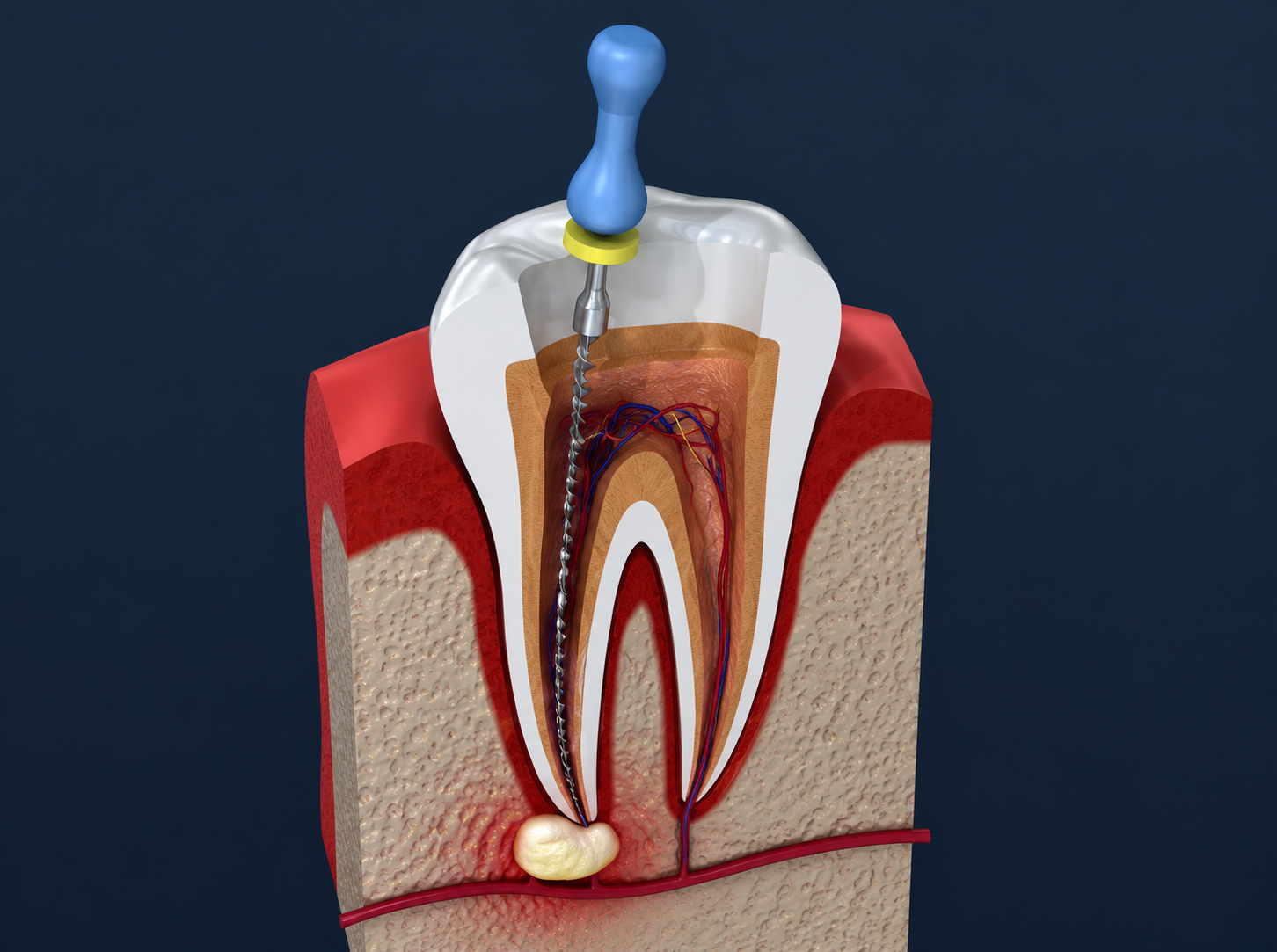
Whether root canal treatment is appropriate depends on your exam, imaging, and tooth condition. Your dentist will review options before treatment begins.
Signs that deserve a dental exam
You may notice a toothache that does not settle, sensitivity to hot, cold, or sweets, pain when biting, swollen gums, or a pimple-like bump on the gum. Some people also notice a bad taste or that one tooth looks darker than its neighbors.
A tooth can also lose its blood supply after decay or trauma. Color may shift toward yellow, brown, or gray. You can have an infection with few symptoms — which is why exams and X-rays matter. None of these signs diagnose a root canal on their own; your dentist confirms what is going on.
What happens during treatment
Diagnosis usually starts with an exam and X-rays. Your dentist may also tap the tooth, check mobility, and feel the nearby gums. If treatment is recommended, the area is numbed with local anesthetic.
An opening is made so the inflamed pulp can be removed with small files. The canals are cleaned and shaped — often with an antimicrobial rinse — then filled and sealed, commonly with gutta-percha. Many teeth then receive a filling and, in most cases, a crown so the tooth can handle everyday biting.
Many visits last about 45 to 60 minutes. Some teeth finish in one appointment; more complex canals may need a second visit. A temporary filling is sometimes placed if the seal and crown are completed later.
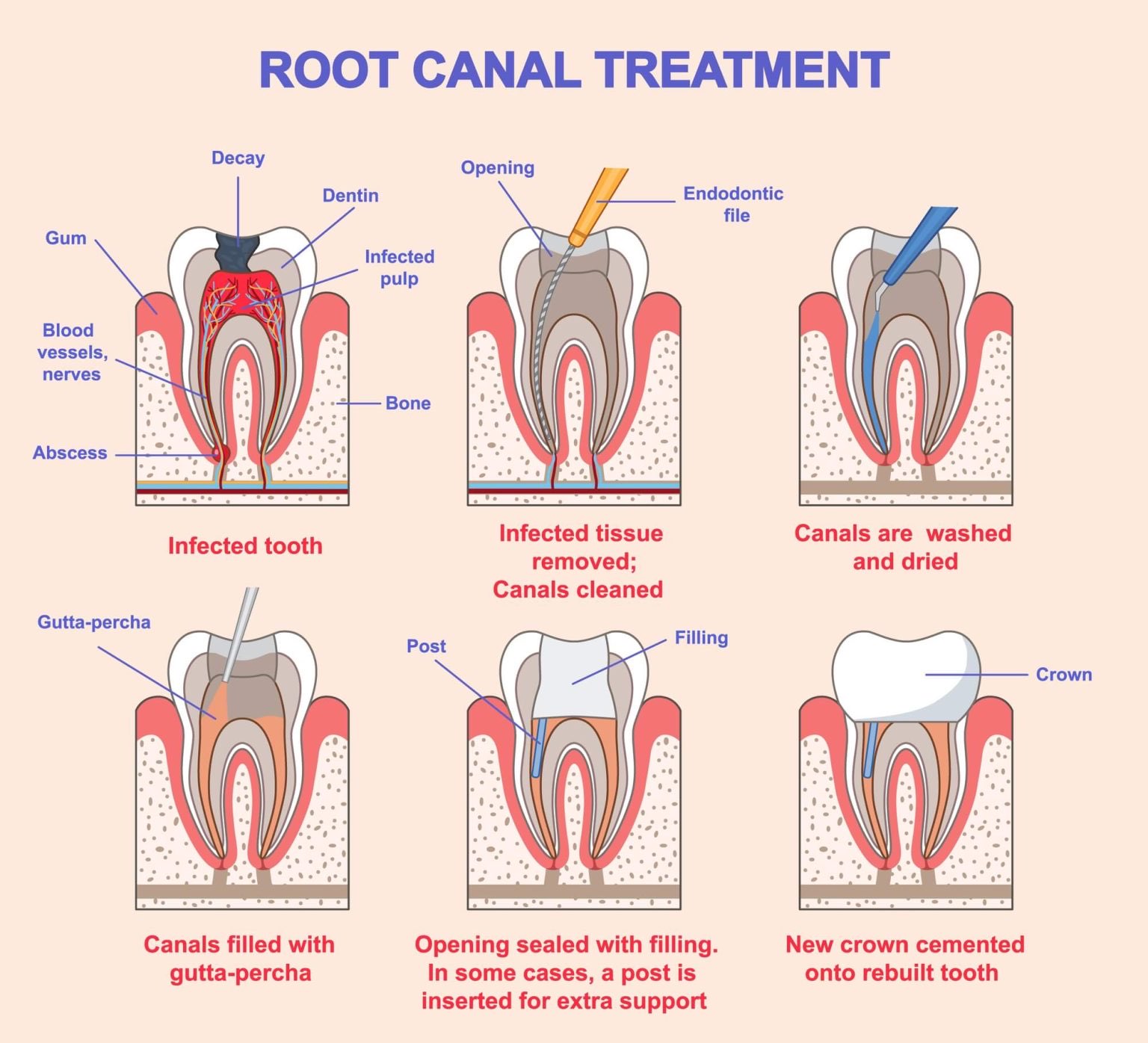
Whether root canal treatment is appropriate depends on your exam, imaging, and tooth condition. Your dentist will review options before treatment begins.
Root canal or extraction?
When a tooth can be saved, keeping it helps support the jawbone and neighboring teeth so they are less likely to drift. Extraction plus an implant, bridge, or denture is the path when the tooth is unrestorable — or when you and your dentist decide replacement is the better plan.
A root canal is often less involved than removing the tooth and rebuilding the space later. Cost and visits vary by the tooth and the replacement option, so your dentist will compare what fits your mouth — not a one-size answer.
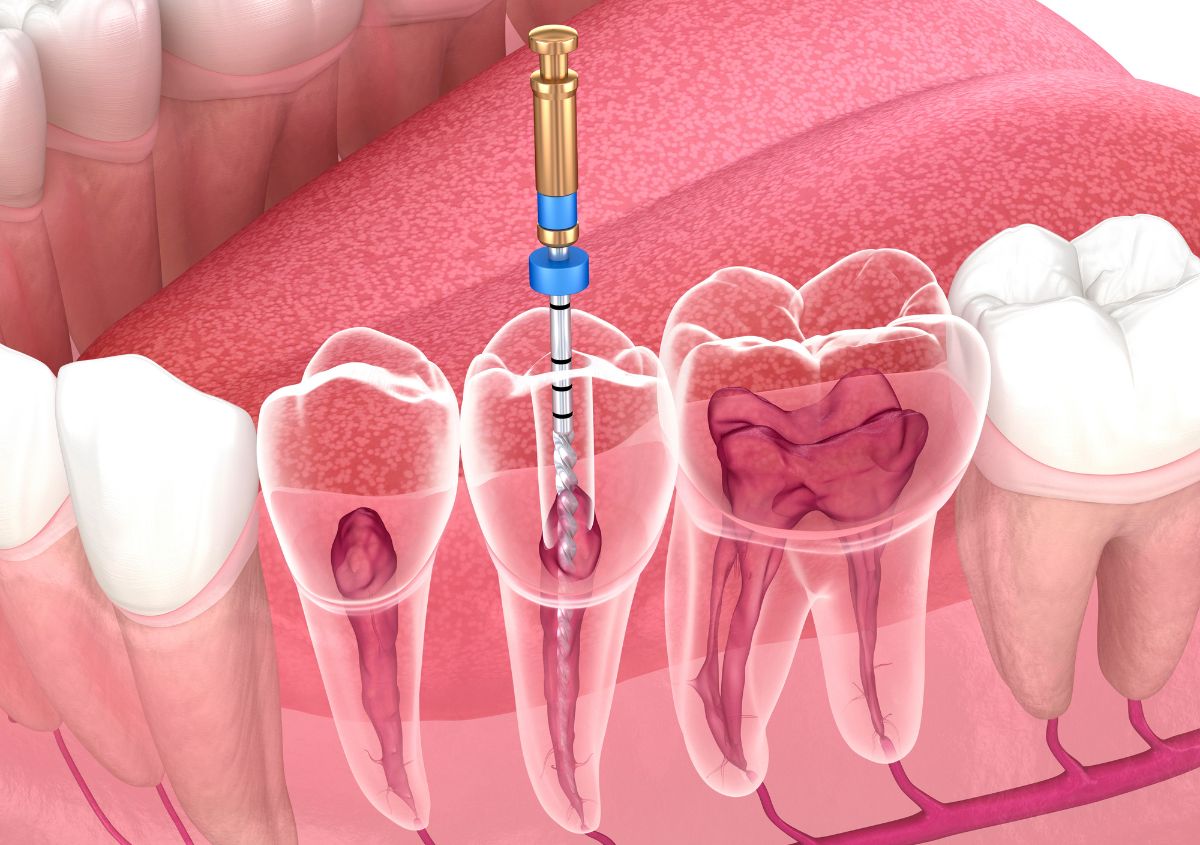
Root canal steps vary by tooth and case. Your dentist will explain what to expect.
Myths and comfort
A common worry is that a root canal will feel worse than the toothache. With modern numbing, many patients compare the visit to having a filling. The aim is to treat the infection that is already causing pain — not to add a more difficult procedure.
Another outdated idea is that root canals cause illness elsewhere in the body. Current dental understanding does not support that claim. Your dentist can discuss safety questions in the context of your health history.
When it fits the tooth, we may use laser-assisted cleaning — including SWEEPS on our Fotona laser — as part of root canal care. That is a comfort and precision option, not a separate treatment. See our laser dentistry guide for how light-touch care works.
After the visit
Soreness, tenderness, or mild swelling is common afterward. Many people feel more like themselves within a few days; lingering sensitivity can take longer when the infection was more extensive. Your dentist will tell you what to watch for.
While you wait for an appointment, avoid chewing hard on that side and skip very hot drinks if they aggravate the tooth. Over-the-counter pain relief may help some people — ask our team what is appropriate for you. Antibiotics may limit spread in some cases, but they do not replace treating the tooth itself.
Ready to have a painful or darkened tooth checked? Call (720) 815-4733 to schedule at Longmont Dental — serving Longmont, Boulder County, and Northern Colorado.
Interactive guide
Whether root canal treatment is appropriate depends on your exam, imaging, and tooth condition.
Root canal questions
Answers about root canal therapy at Longmont Dental — from our prepared patient information and everyday questions we hear in the office.
Ready for dental care that feels like family?
Start with the simplest next step: request an appointment, call the office, or get directions before your first visit.
Use the Call, Directions, or Request options below to get started.