

How does 3D imaging help me understand my care?
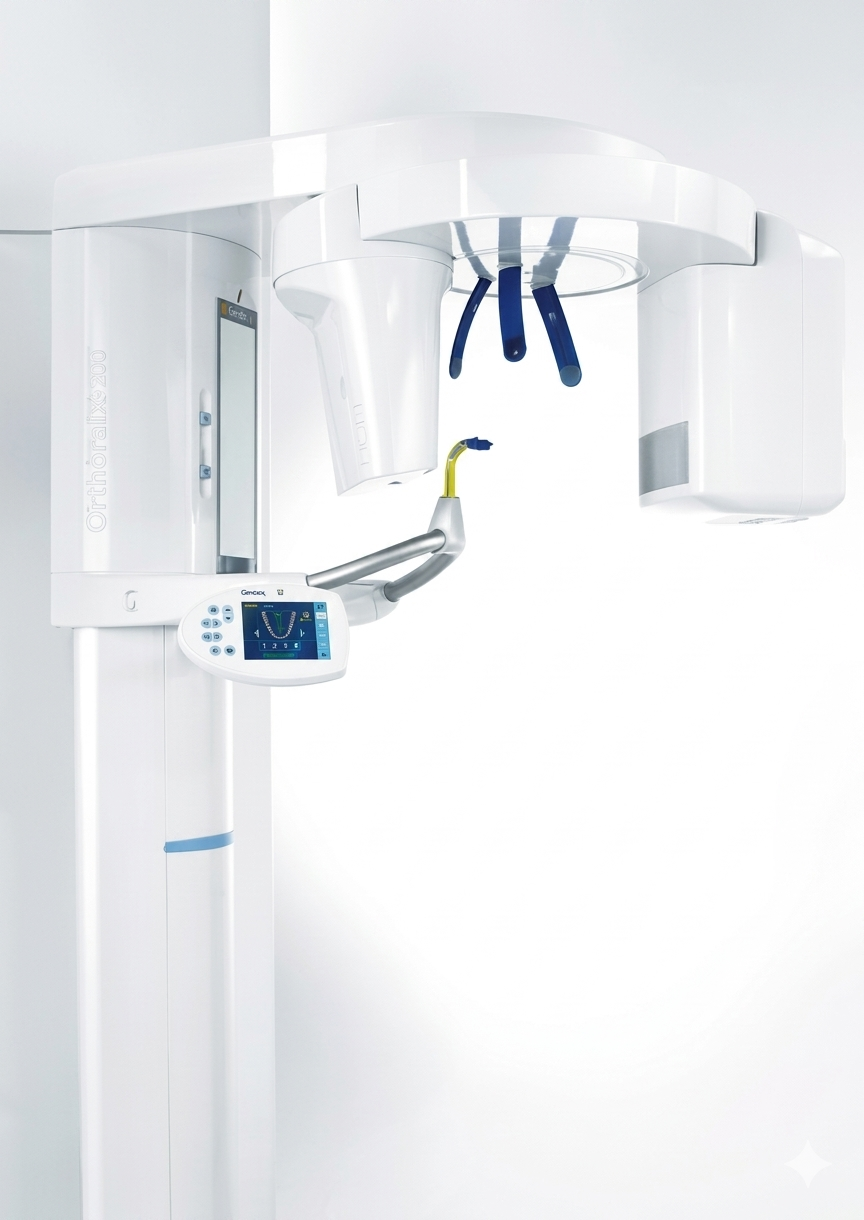
Orthophos XG 3D imaging helps Dr. Kurt and Dr. Wyatt Knechtel see more clearly before recommending care — supporting accurate diagnosis, personalized planning, and patient conversations you can understand.
Clearer answers before treatment
At Longmont Dental, technology supports a genuinely caring, highly relational, and personalized experience. Orthophos XG 3D imaging helps your dentist accurately diagnose underlying conditions and plan treatment with clearer information.
The goal is not technology for its own sake. The goal is a better conversation about what is happening, why a recommendation fits, and how your care can move forward with confidence.
How cone-beam imaging captures detail
Orthophos XG 3D is a cone-beam computed tomography scanner. It captures images from different angles as a specialized arm rotates around you in a full 360-degree pass.
Cone-beam imagery can show a big-picture view of the oral cavity along with structures of the ear, nose, and throat. That broader view can support diagnosis and planning for complex cases.
Fast scans for a more comfortable visit
Comprehensive scans can be rendered in a matter of seconds, which can be helpful for apprehensive patients and young or fidgety children.
Because the images can be viewed with you on a monitor, the scan can become part of a trust-building conversation — helping you understand what your dentist sees.
Settings tailored to the diagnostic need
The Orthophos system includes standard and high-definition modes, including an endodontic mode for root canal planning when needed.
Its customizable features let the team adjust volume, dose, and image quality for the diagnostic purpose. That supports safety by controlling radiation exposure while still capturing clear, detailed images of targeted areas.
Where 3D imaging can support care
Many complex cases and treatments can benefit from this non-invasive diagnostic process, including orthodontics, implant placement, and endodontic treatment planning.
Your dentist will recommend 3D imaging only when it helps clarify diagnosis or treatment planning for your situation.
See what your dentist sees
Often, the technology has to be seen and experienced to understand and appreciate it. If 3D imaging is appropriate for your visit, your dentist will explain why and walk you through the images.
Call (720) 815-4733 to schedule a visit with Longmont Dental in Longmont.
3D imaging that supports planning
When a case needs a clearer picture, cone-beam imaging helps your dentist understand teeth, jaw, airway, and surrounding structures before recommending next steps.
How does 3D imaging help me understand my options?
3D imaging that supports planning
When a case needs a clearer picture, cone-beam imaging helps your dentist understand teeth, jaw, airway, and surrounding structures before recommending next steps.
How does 3D imaging help me understand my options?
Quick scan
The scanner rotates around you and captures detailed images in seconds.
Clearer view
Cone-beam images show a big-picture view of the mouth and nearby structures from multiple angles.
Personalized settings
Volume, dose, and image quality can be adjusted to the diagnostic need.
Shared plan
Images can be reviewed on screen so you can understand what your dentist sees.
Your dentist recommends 3D imaging only when it supports diagnosis or treatment planning for your situation.
3D imaging questions
Answers about Orthophos XG 3D imaging at Longmont Dental — from our prepared patient information.
Ready for dental care that feels like family?
Start with the simplest next step: request an appointment, call the office, or get directions before your first visit.
Use the Call, Directions, or Request options below to get started.